The Milky Way Is a Photo. Its Stars Had to Go.
Atlas #15
In this post
- The old night had moonlight but no moon in the sky
- Photographed stars blur when the camera zooms
- The dust lanes cross the sky above Yildizova
- The Moon uses an orbiter map and is drawn larger
- Wide lenses stretched the stars; glare hid the Moon’s seas
- The native branch renders the sky; the browser still has the old night
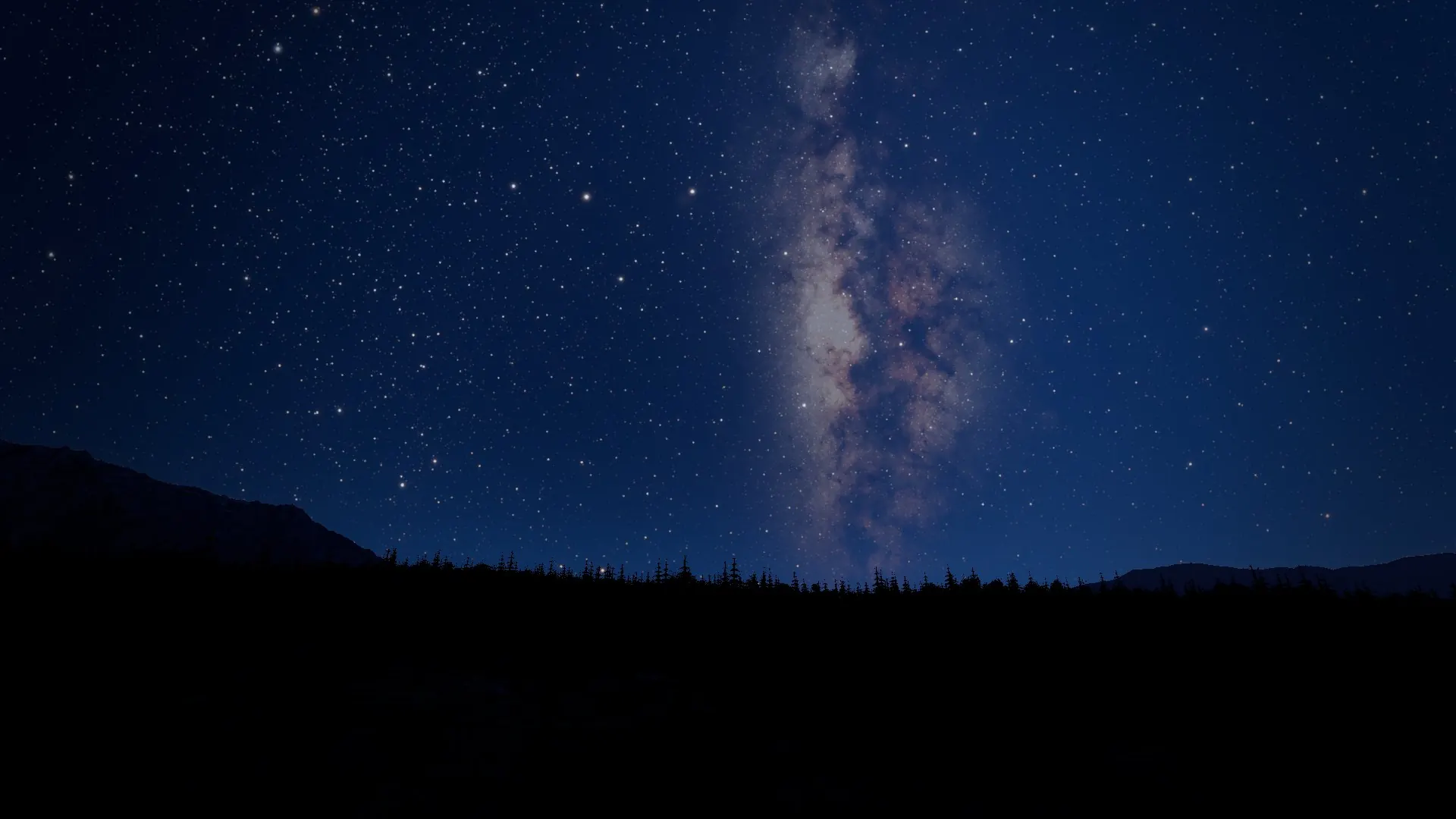
Above the spruce south of Ilvesvaara, the Milky Way rises through a sky of sharp points. Its dust lanes come from a photograph of our galaxy. Its individual stars are drawn separately by the game, after their photographed counterparts were removed to stop them turning into blurred spots when the camera zooms.
This view runs in a native development build of Atlas. The photographic sky was rendered from branch commit 17dc93f7; it is not a claim that the browser game already has this sky.
Ilvesvaara sits in the great northern forest. Its name means lynx hill. Over the treetops, the stars crowd thickest along the galaxy’s bright band.
The Milky Way imagery is adapted from ESO/S. Brunier’s panorama, under CC BY 4.0. The adaptation removes star points, adjusts brightness and rescales the photograph. The Moon imagery comes from NASA’s Scientific Visualization Studio.
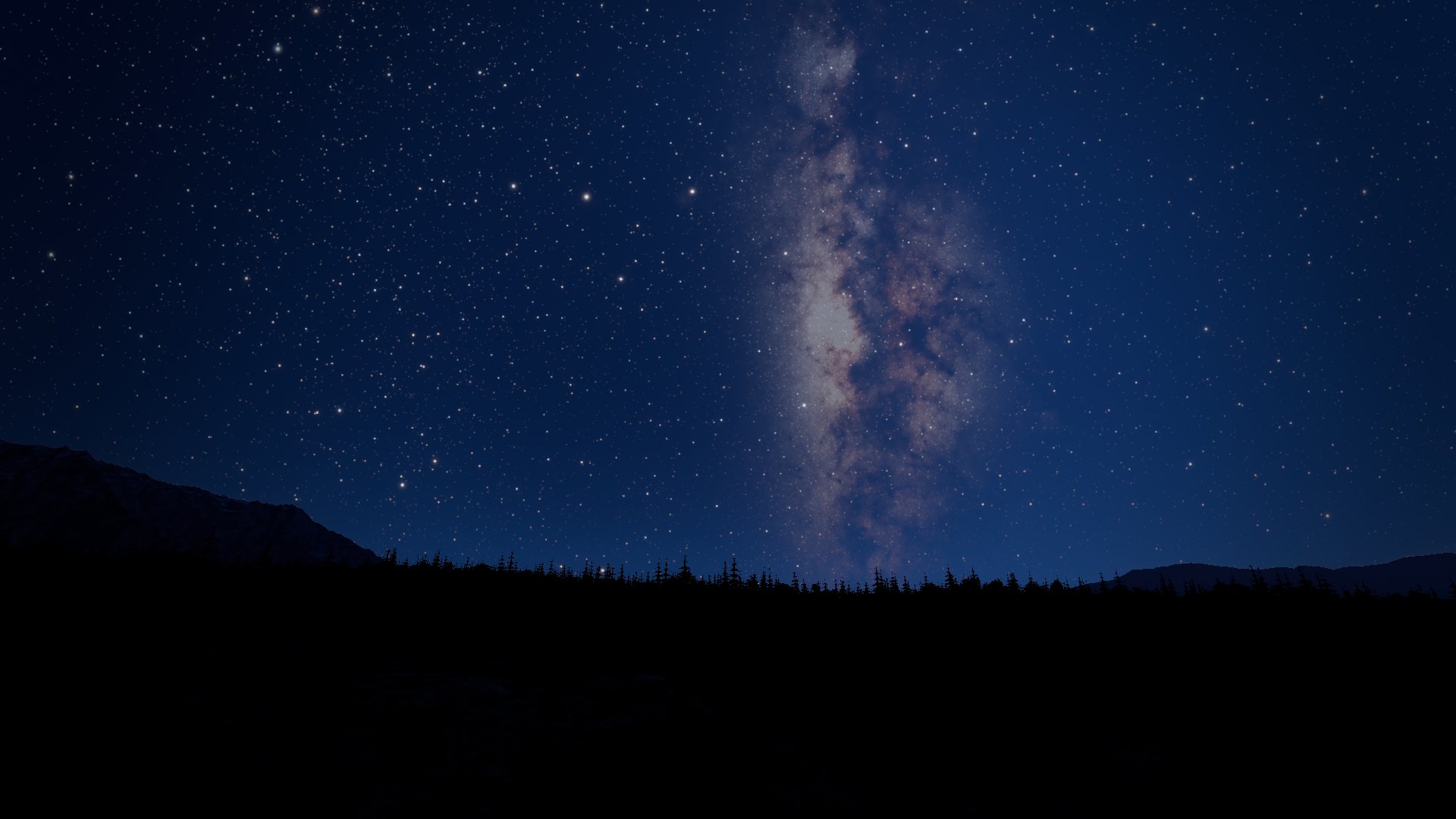
South of Ilvesvaara, looking up over the forest through a 75° lens. Rendered in the Atlas engine on 2026-10-27 (branch commit 17dc93f7). Milky Way: ESO/S. Brunier. Look along the band's left edge: the dust there ends in ragged filaments, and the stars in front of it are the game's, not the photograph's.
The old night had moonlight but no moon in the sky#
Atlas lights its nights like a film: "day for night". The land is lit by a moon standing where the sun would be, and the whole frame is graded down into deep blue. That keeps the ground visible after dark. But the sky above was the day's sky, graded blue with the rest. There was nothing in it: no stars, no galaxy, and no moon where the moonlight came from.
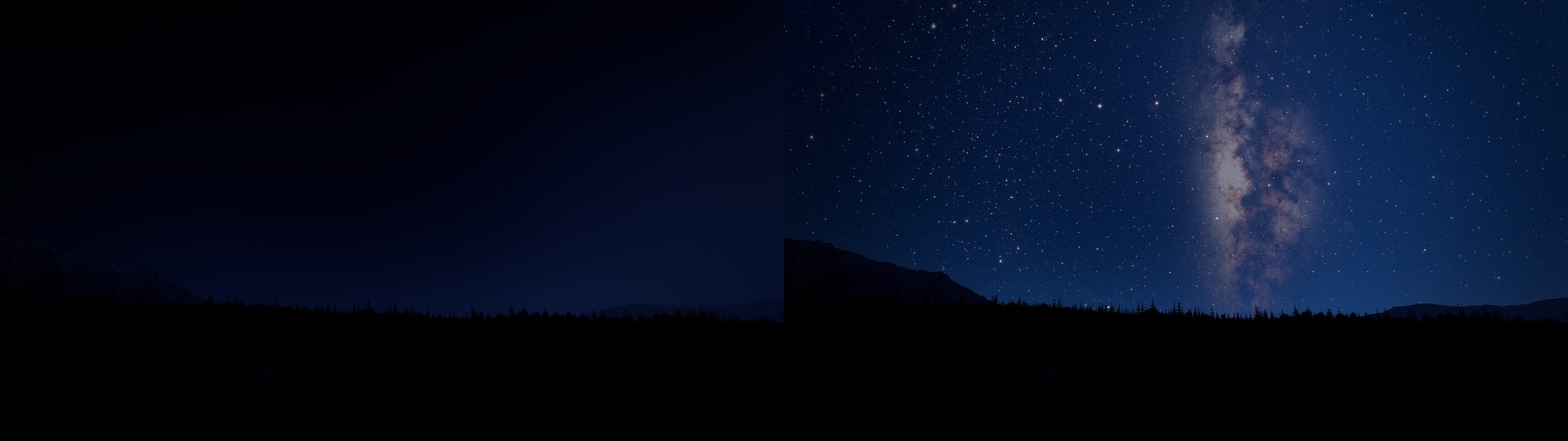
Before and after, from the same camera over the same moonlit land. Left: the night as it was (the new sky switched off in the same build). Right: the night sky. Milky Way: ESO/S. Brunier.
Photographed stars blur when the camera zooms#
The galaxy is ESO's Milky Way panorama by Serge Brunier: the whole sky in one 6000 × 3000 picture, stitched from nearly 1,200 photographs taken under the dark skies of the Atacama Desert and of La Palma. It is laid out in galactic coordinates, with the galaxy's centre in the middle. Atlas uses that coordinate frame to place the panorama on its sky.
At that size, though, each of its pixels covers about 1.5 pixels of a 75° view on a screen 1,920 pixels wide. A photographed star becomes a soft smudge, and a sky full of soft smudges looks like a painted backdrop. So the preprocessing removes bright star points before the photograph reaches the game. The program finds each pixel that stands well above the median brightness around it and replaces it, and a pixel of rim, with that median. The first mask, including the rims around bright points, covered 22.8 % of the photograph's pixels. A second, wider pass caught the few brightest stars and their glow, another 0.08 %. What stays is everything that is not a point: the glow of stars too faint to resolve, the star clouds, and the dust lanes. The broad dust lanes remain visible after that filtering.
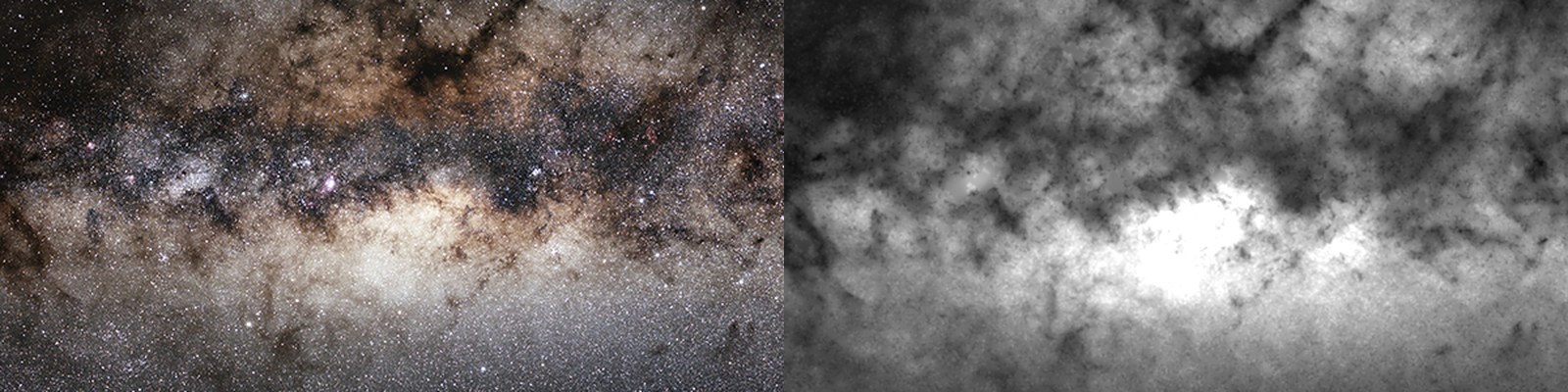
The galactic centre. Left: the photograph as ESO publishes it (ESO/S. Brunier). Right: the brightness map the game reads, the same 600 × 300 pixels after the stars came out, its tones stretched. The broad dust lanes remain, while the bright points are suppressed.
The replacement stars are procedural points, not a catalogue of the stars in Brunier’s photograph. The game draws them on the screen, one pixel wide at any zoom. A few bright ones carry a soft glow. Then come fainter and fainter layers, down to magnitude 10.8. The faintest layers grow denser wherever the photograph is bright, so the band is grainy with points, the way a long exposure is.
The dust lanes cross the sky above Yildizova#
From the mountain shoulder above the gorge, 2.5 km from Yildizova, the band crosses the sky on a slant, its lanes running along it like cracks in ice. The village's name has the word for star in it.
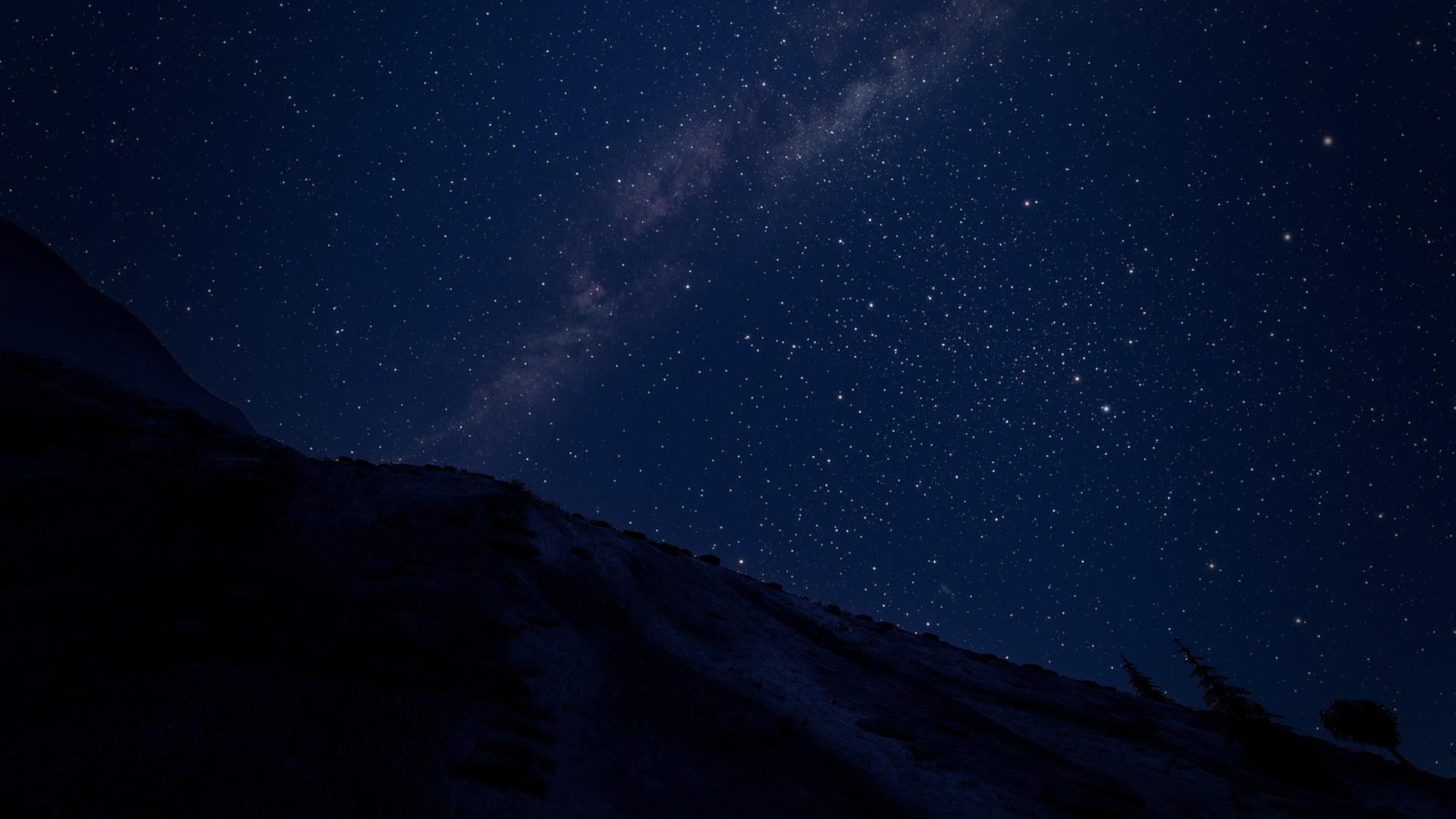
Above the gorge near Yildizova, a 90° lens looking up. Same build. Milky Way: ESO/S. Brunier. The slope is lit by the moon, out of frame behind the camera.
The Moon uses an orbiter map and is drawn larger#
The moon now stands exactly where its light comes from, so its disc and the shadows on the land always agree. Its face uses a lunar colour map assembled from Lunar Reconnaissance Orbiter data and published by NASA's Scientific Visualization Studio. Imbrium, Serenitatis and Crisium sit where they sit over Earth, and Tycho throws its rays to the south. It is drawn 2.5 times its true size. It is lit by the sun below the far horizon, so it is always a little short of full.
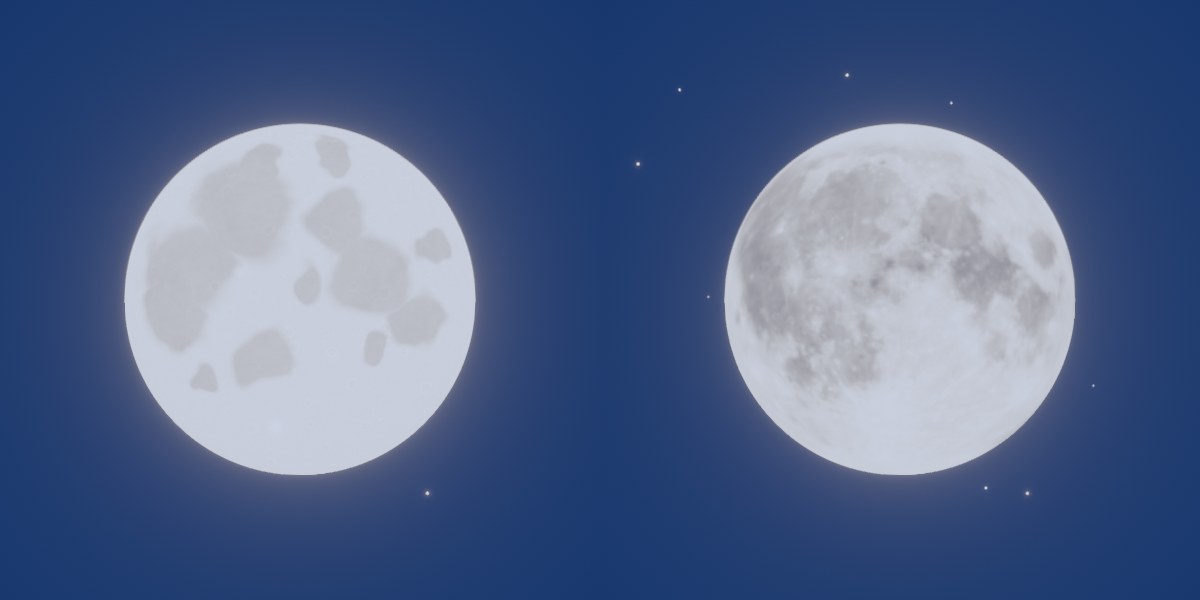
A 4° telephoto. Left: the moon drawn from noise (an earlier build, branch commit 9c929323), its seas placed where the real ones are, but as blobs. Right: the orbiter's map. Moon: NASA's Scientific Visualization Studio.
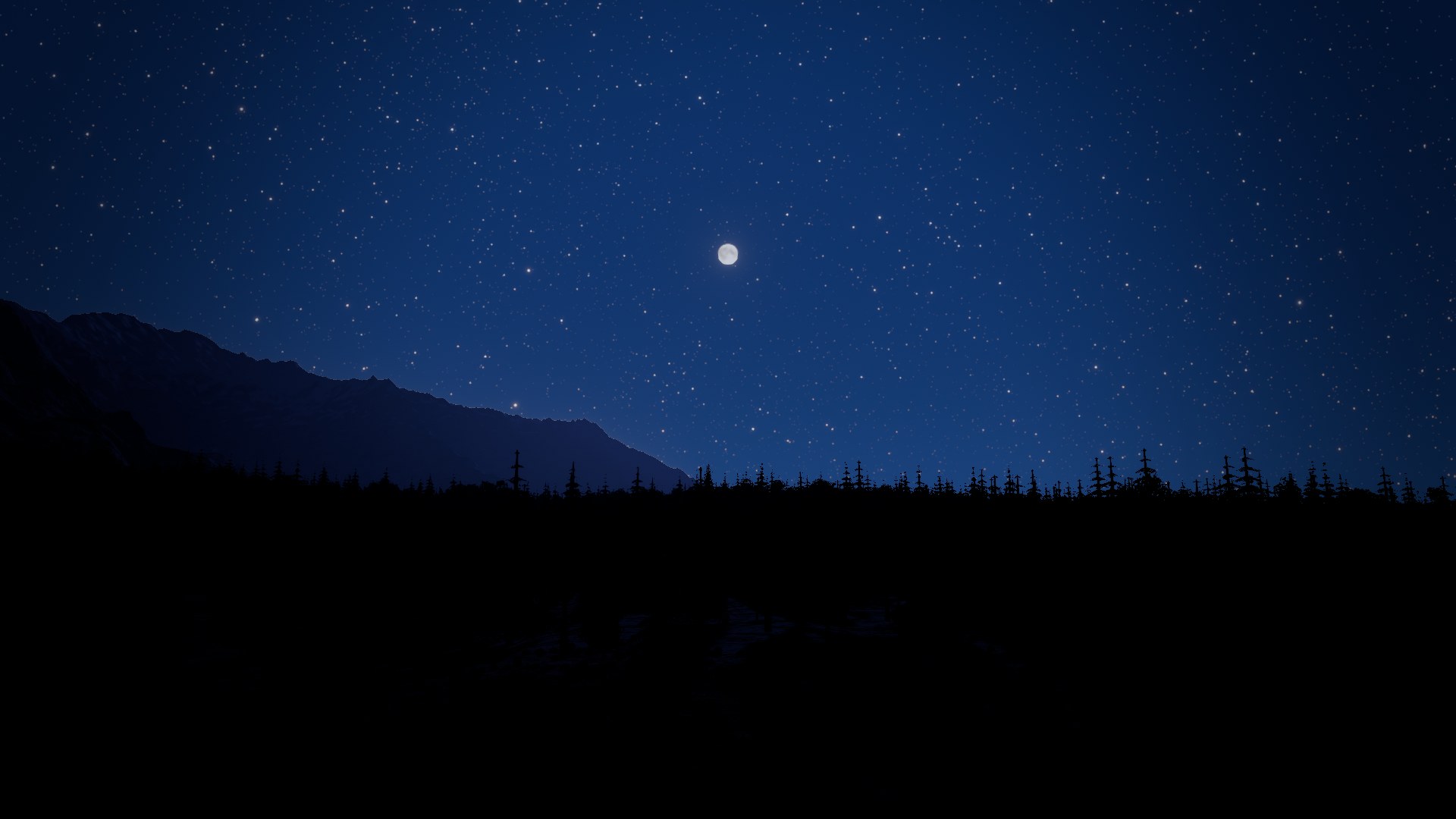
The moon in a 50° view, about 27 pixels across, near Ilvesvaara. Same build. The stars fade out close around it, washed out by its light.
Wide lenses stretched the stars; glare hid the Moon’s seas#
Every version went to a critic who had seen none of the others, working from real night photographs. Each critic got the renders under shuffled labels and knew nothing about how they were made. Over five rounds they caught things we had walked straight past.
- Stars stretched into ovals. Toward the corners of a wide lens, the bright stars had all become ellipses, tilted the same way. Each star was a circle measured on the sky, and a flat picture of the sky stretches circles near its edges. Now a star is measured in screen pixels, so it stays round in every corner.
- Seas that vanished. At one point the moon was so bright that its seas sat only about 4 % darker than its highlands, up where the picture's brightest values are squeezed together. A dimmer moon got them back.
- A blurry telephoto. The moon chose its texture's sharpness from its radius in pixels instead of its diameter, so it read one step too soft.
- A smoky Milky Way. Before the photograph, the band was drawn from noise. Critic after critic said it read as smoke rising from the forest. That is why the sky is a photograph now.
The fifth review reported no major remaining sky defect in the supplied views. It still found a problem below the sky: with the full moon in front of the camera, the forest floor under it renders pure black, a void beneath a bright moon.
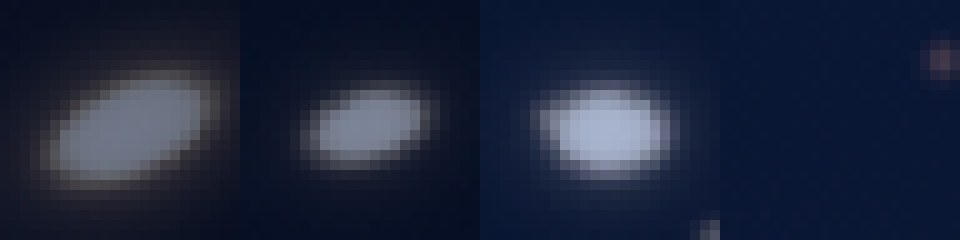
An earlier version, enlarged ten times: bright stars near the corner of a 90° lens, all stretched into ovals tilted the same way.
The native branch renders the sky; the browser still has the old night#
- Shown in the native branch build: the photographic galaxy, separately drawn stars and mapped Moon. The sky turns with the hour at the island's latitude, and clouds pass in front of the stars.
- Not in the browser build yet. It keeps the old night.
- The moon is always nearly full. It stands across the sky from the sun, and there are no phases yet. So a bright moon and a bright Milky Way share every night, rather than following the changing phases and viewing conditions seen from Earth. The current sky is deliberately not an astronomically accurate Earth sky.
- The land under the moon can go black. Looking toward the moon, the ground is lit from behind and the night grade crushes it to black. That remains an unresolved rendering defect.
- The photographs live outside the game's code, in our storage. Without them, the game falls back to a sky drawn from noise.
The galaxy's heart stands higher over the island than over any place at the same latitude on Earth: 32 degrees above the southern horizon at its highest, not 15. And the island's sky was photographed from a desert and from another island.